Furniture can be evaluated from a distance by its silhouette, but craftsmanship is often best understood up close.
Look at the edge of a tabletop.
The grain pattern across a cabinet door.
The carved leg of a chair.
The transition between timber and metal.
The inside of a drawer.
These details reveal how a piece was made.
For many handcrafted furniture traditions, decoration is not simply applied after construction. The making process itself becomes part of the design.
What Does Furniture Craftsmanship Mean?
Craftsmanship refers to the skill, knowledge and attention involved in transforming raw materials into a finished object.
In furniture, this can include
Joinery
Carving
Veneering
Marquetry
Inlay
Surface Preparation
Finishing
Gilding
Upholstery
Different styles emphasise different techniques.
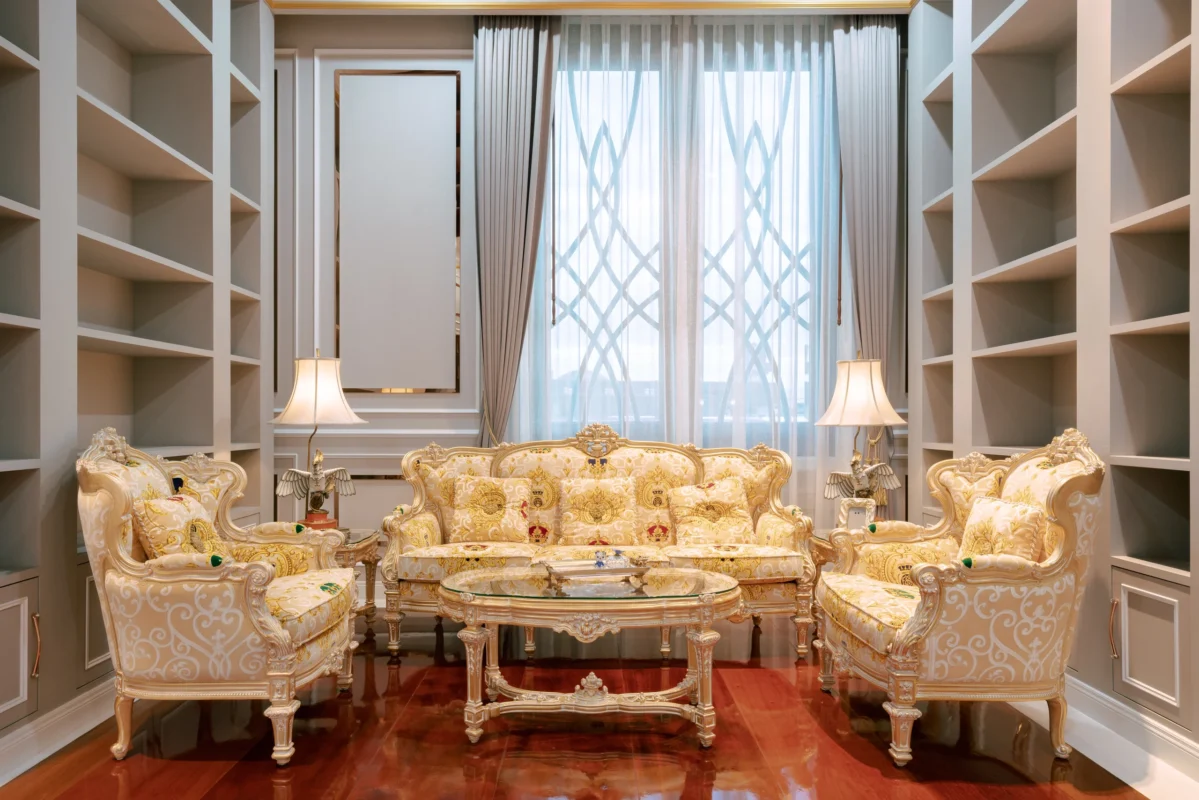
Classic furniture may display visible carving and decorative inlay.
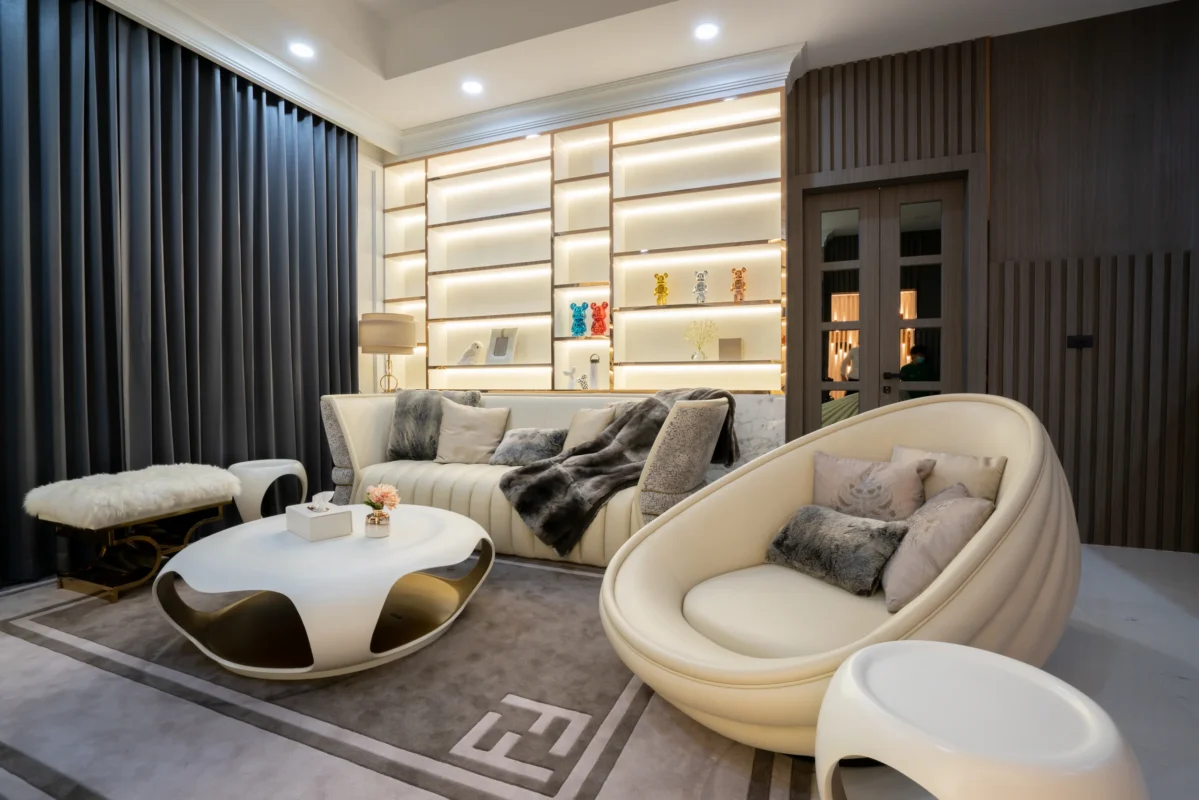
Contemporary furniture may appear simpler but demand equal precision in surfaces, alignment and material transitions.
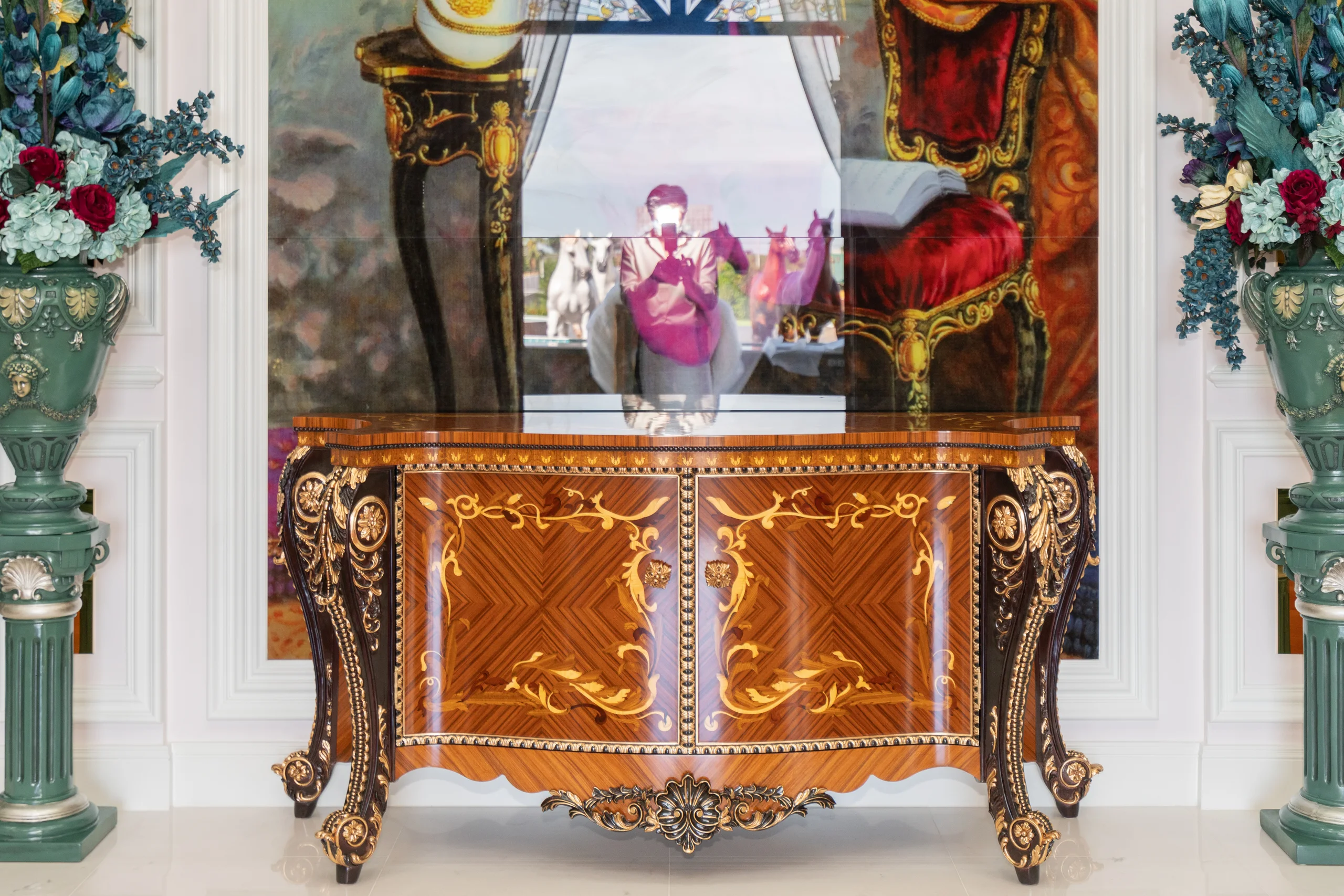
MARQUETRY
What Is Marquetry?
Marquetry is the art of creating decorative patterns or images by arranging thin pieces of material across a surface.
Wood veneers with different colours and grain directions can be cut and assembled to produce geometric or organic patterns.
The technique is often seen on
Tabletops
Cabinet Doors
Consoles
Desks
Decorative Panels
Why Does Grain Direction Matter?
Wood is not a flat colour.
The grain reflects light differently depending on direction.
A skilled composition can therefore create subtle depth without using different paint colours.
Two pieces of the same wood species may appear different simply because the grain is rotated.
Marquetry vs Inlay
The terms are related but not always identical.
Marquetry generally refers to decorative veneer composition across a surface.
Inlay often involves inserting a material into a prepared recess in another material.
Both require careful cutting and fitting.
WOOD CARVING
Hand-Carved Detail
Wood carving transforms a flat or structural element into a three-dimensional decorative surface.
It may appear on
Chair Legs
Table Aprons
Cabinet Frames
Bed Frames
Mirror Frames
Console Supports
Depending on the style, carving can range from restrained grooves to highly detailed floral and sculptural motifs.
Why Carving Is More Than Decoration
Good carving needs to work with the proportion of the furniture.
If details are too deep or heavy, they can overpower the form.
If too shallow, they may disappear after finishing.
The craftsman must consider
Wood Species
Grain
Tool Direction
Depth
Symmetry
Final Finish
before the piece reaches the finishing stage.
MOTHER OF PEARL INLAY
What Is Mother of Pearl?
Mother of Pearl is an iridescent material found within certain shells.
Its reflective quality changes as the viewing angle changes.
When cut into small pieces and set into furniture, it can create highly detailed decorative surfaces.
Why Does It Look Different Under Different Light?
Unlike paint, Mother of Pearl does not produce a uniform flat colour.
Its surface interacts with surrounding light.
Natural daylight, warm decorative lighting and directional spotlights can therefore reveal different tones.
This changing appearance is part of its character.
GOLD LEAF
Gold Leaf Is Not Simply Gold-Coloured Paint
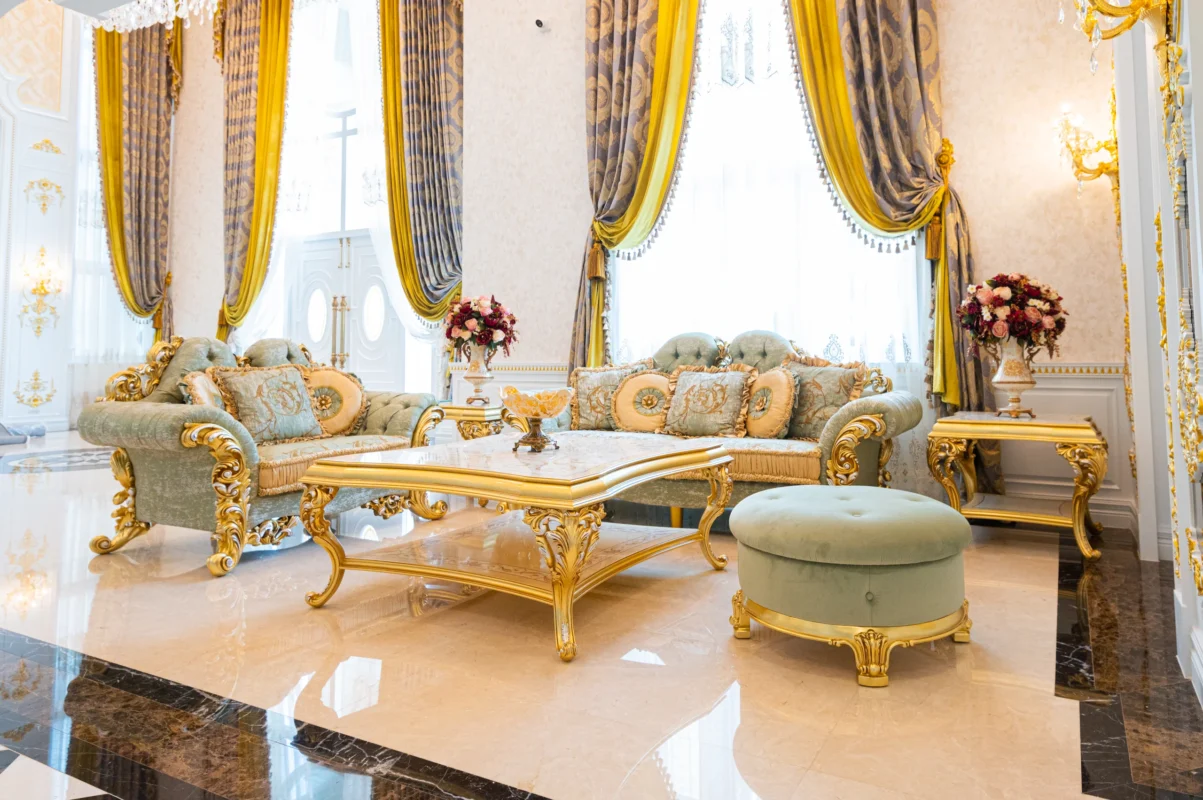
Traditional gilding uses extremely thin sheets of metal leaf applied over a carefully prepared surface.
Surface preparation is critical because the final reflective layer can reveal imperfections underneath.
Gold leaf may appear on
Carved Furniture
Frames
Decorative Panels
Table Details
Mirror Frames
Why Does Gilding Have Depth?
The visual result comes from several layers beneath and above the leaf.
Depending on the technique, the surface may be polished, toned or aged to produce anything from a bright reflective finish to a softer antique appearance.
WOOD FINISHING
One of the least visible but most important parts of furniture production is surface preparation.
Before finishing, wood may go through multiple stages of
Sanding
Filling
Sealing
Staining
Colouring
Coating
Polishing
A high-quality finish should not only look attractive from a distance but feel consistent when touched.
Why Finish Areas You Cannot See?
Attention to hidden areas can reveal the manufacturer’s overall approach to craftsmanship.
Examples include
Back Panels
Drawer Interiors
Undersides
Edges
Hardware Areas
These details may not be visible during everyday use but contribute to the sense of completeness of the piece.
Handcrafted Does Not Mean Imperfectly Made
There is an important distinction between natural variation and poor workmanship.
Handcrafted surfaces may contain small variations resulting from material and process.
However, structural alignment, joinery, finish consistency and functionality should still meet appropriate standards.
Why Craftsmanship Still Matters in Contemporary Homes
Craftsmanship is not limited to traditional interiors.
A Contemporary room may use one handcrafted cabinet or sculptural table as a focal point against otherwise simple architecture.
This contrast can make the detailed object more noticeable.
For example:
Clean Wall Panel
- Handcrafted Marquetry Console
allows the craftsmanship to become the visual emphasis.
How to Evaluate Furniture Craftsmanship
When viewing furniture in person, look beyond the front elevation.
Check:
Are joints clean?
Are drawers aligned?
Does the finish continue around edges?
Are carved details consistent?
How does the back look?
How does the hardware feel?
Is the surface smooth where it should be?
Does the piece feel stable?
These observations often tell more about quality than decoration alone.
Craftsmanship FAQ
Is handcrafted furniture always better?
Not automatically. Quality depends on design, materials, construction and the skill of the maker.
Is marquetry painted?
Traditional marquetry creates patterns using veneers or other materials rather than simply painting the pattern onto the surface.
Is Mother of Pearl natural?
Natural Mother of Pearl comes from shell material, although synthetic alternatives also exist in the wider market.
Does Gold Leaf require special care?
Decorative gilded surfaces should generally be handled gently and cleaned according to the manufacturer’s recommendations.
Craftsmanship Gives Furniture a Story Beyond Its Shape
Furniture is ultimately designed to be used.
But when material, technique and detail are considered together, it can also express the skill of the people who made it.
La Casa International’s collections include furniture that incorporates traditional decorative techniques such as Marquetry, Wood Carving, Mother of Pearl Inlay, specialised Wood Finishing and Gold Leaf alongside Contemporary and Modern Luxury designs.