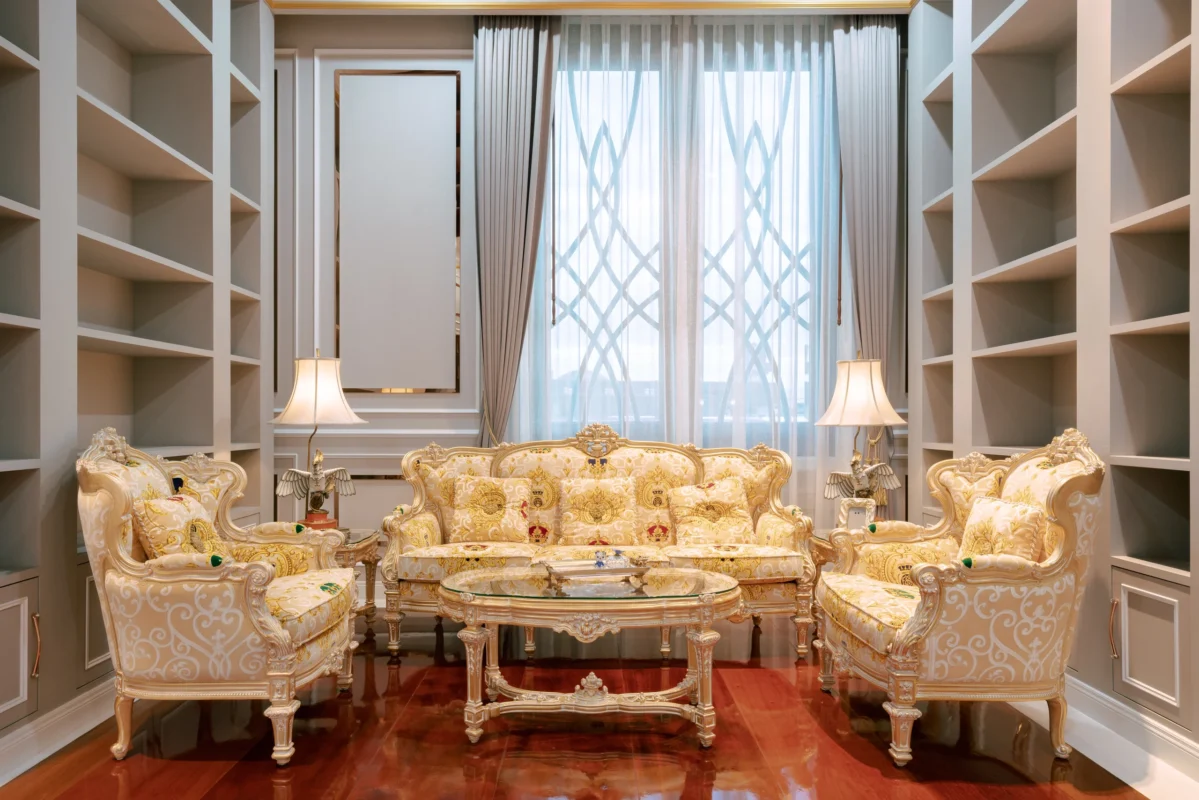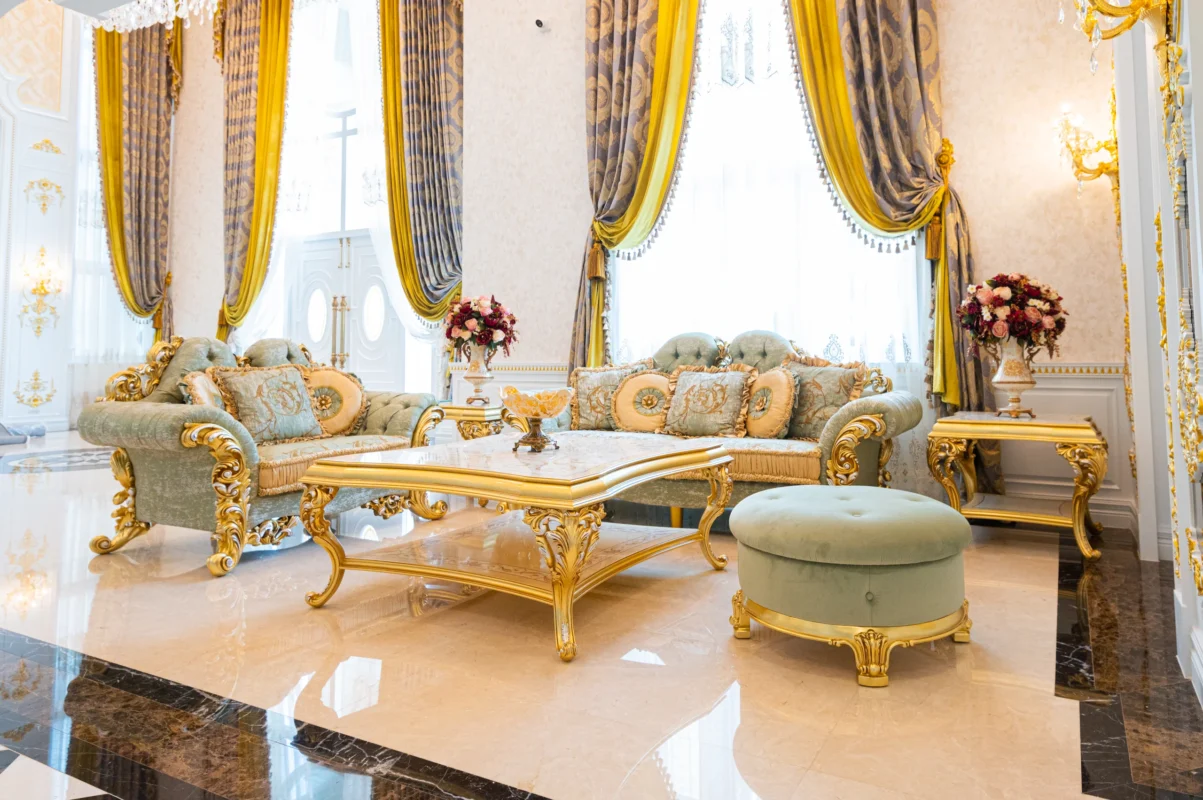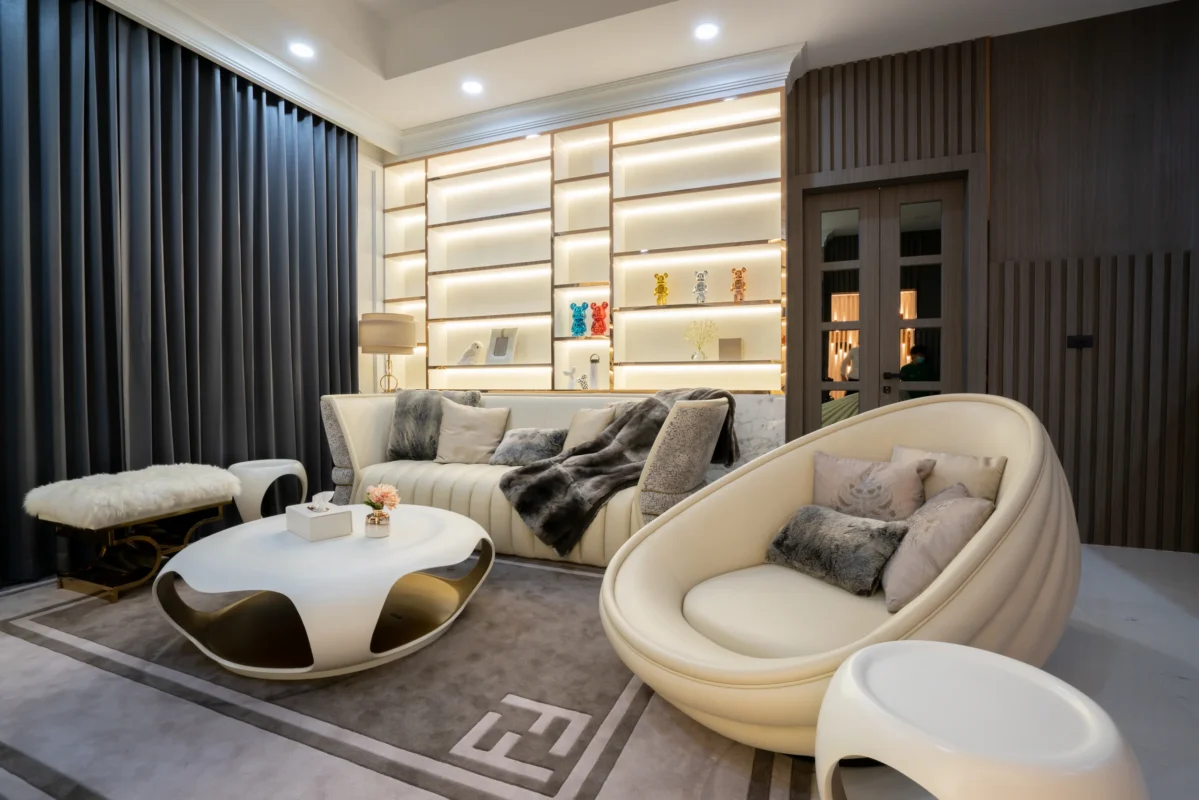
A Complete Guide to Interior Design: How to Bring Furniture, Lighting, Rugs and Decoration Together
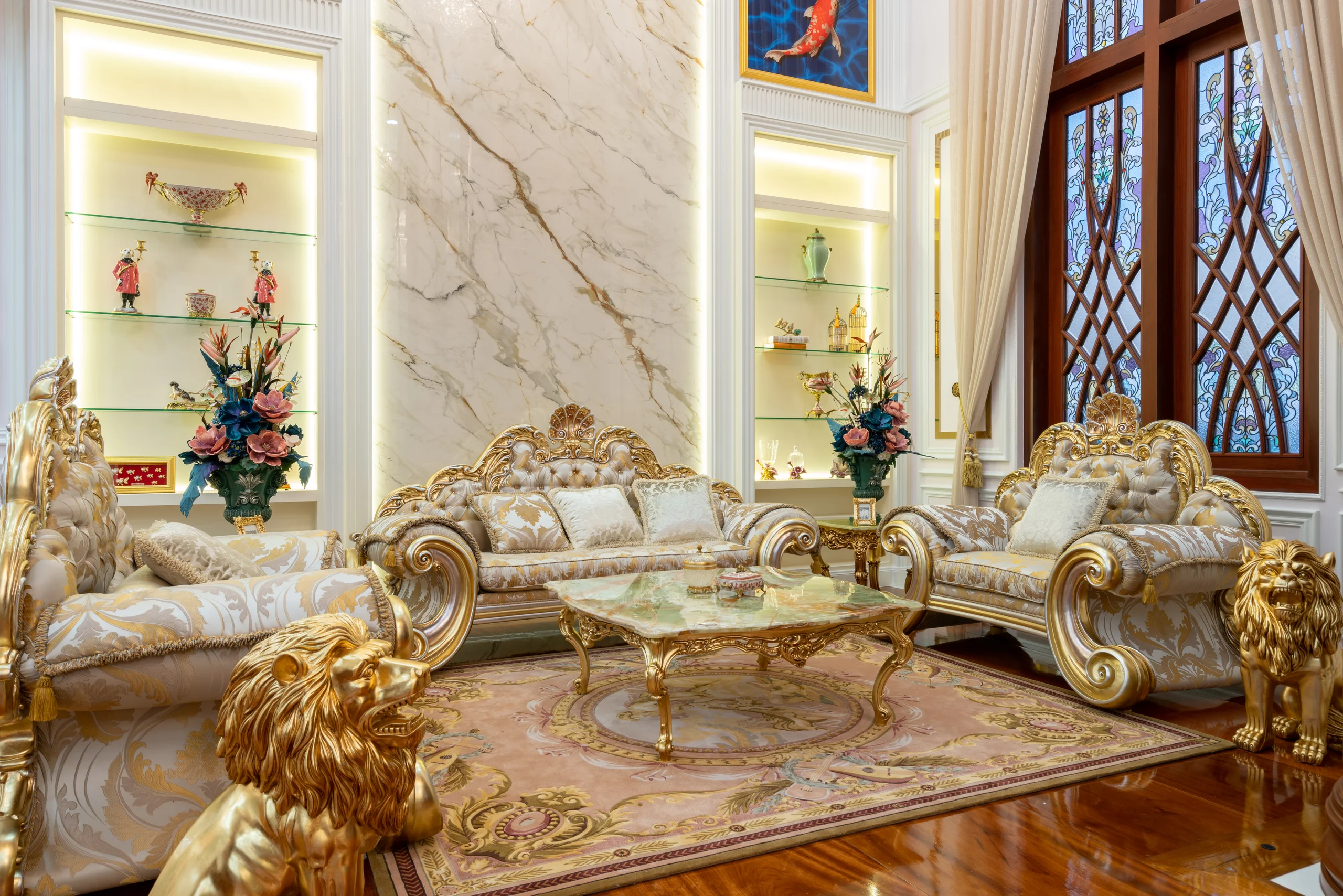
A beautiful interior is rarely created by one extraordinary object.
You can have an exceptional sofa, chandelier, rug and artwork and still end up with a room that feels disconnected.
Why?
Because good interior design is not about selecting the best individual objects.
It is about creating a relationship between Architecture, Furniture, Lighting, Materials, Textiles, Art and Space.
This guide explores how those elements can be considered together when designing a home.
1. Start With the Space Before Choosing the Style
Pinterest and interior references are useful, but every property has its own architecture.
Begin by understanding:
Room Dimensions
Ceiling Height
Natural Light
Window Position
Doorways
Existing Flooring
Architectural Details
Views
Circulation
A double-height living room requires a different approach from a compact condominium even if both clients like the same furniture.
2. Define How the Room Will Be Used
Function should influence design decisions.
For a Living Room, ask:
How many people use it every day?
Is television important?
Do you entertain guests?
Is formal seating required?
Are children using the room?
Is there a reading area?
Does it connect directly to the dining room?
The answers will influence everything from Sofa Depth to Lighting Layout.
3. Choose a Design Direction
You do not need to label the entire home with one strict style.
However, having a direction makes decisions easier.
Possible directions include
Classic
Traditional
Contemporary
Modern Luxury
Eclectic
Transitional
A home can combine styles, but it should still have a consistent design language.
4. Create a Colour Palette
Rather than choosing colours piece by piece, develop a palette.
Start with the largest existing surfaces:
Floor
Walls
Stone
Woodwork
Then add furniture colours.
Finally introduce smaller accents through
Rugs
Cushions
Artwork
Accessories
5. Build a Material Palette
Colour is only one layer.
Two rooms can use exactly the same beige colour palette and still feel very different depending on material.
Consider combining
Wood
Natural Stone
Metal
Glass
Leather
Linen
Velvet
Wool
Ceramic
The contrast between smooth and textured, reflective and matte, soft and hard creates depth.
6. Select the Main Furniture First
Start with the pieces that determine the layout.
In a Living Room:
Sofa
Major Armchairs
Coffee Table
In a Dining Room:
Dining Table
Dining Chairs
In a Bedroom:
Bed
Bedside Tables
Once these are established, smaller elements become easier to select.
7. Understand Scale
One of the biggest differences between a professionally composed interior and a room filled gradually with individual purchases is often scale.
Large architecture requires furniture with enough visual presence.
Small spaces require discipline.
But “small room = tiny furniture” is not always correct.
Sometimes fewer, appropriately scaled pieces can make a small room feel calmer than many small objects.
8. Create Furniture Relationships
Do not evaluate each item alone.
Ask:
How does the Coffee Table relate to the Sofa?
How does the Armchair relate to the Rug?
How does the Chandelier relate to the Dining Table?
How does the Artwork relate to the Console?
Interior design is about these relationships.
9. Add the Rug Earlier Than You Think
Rugs are often treated as the final decoration.
In reality, a rug can be fundamental to planning a furniture group.
It defines zones, especially in open-plan interiors.
For example:
Living Zone
Dining Zone
Reading Zone
can coexist in the same large room while remaining visually distinct through rugs and lighting.
10. Design Lighting in Layers
Good lighting can transform the same interior from day to night.
Combine
General Lighting
Task Lighting
Accent Lighting
Decorative Lighting
Then consider how each layer is controlled.
A room does not always need every light switched on at the same time.
Different lighting scenes can support different activities.
11. Treat Decorative Lighting as Furniture
A chandelier or floor lamp has physical volume.
It occupies space even when switched off.
Therefore, decorative lighting should be selected with the same attention to proportion as furniture.
A sculptural floor lamp can balance an empty corner.
A chandelier can become the central object above a dining table.
Wall lights can establish rhythm along a corridor.
12. Use Natural Materials Thoughtfully
Materials such as wood, marble, travertine and alabaster contain variation.
That variation can add depth and individuality.
Rather than expecting every vein or grain to repeat perfectly, consider how individual pieces relate as a group.
Natural materials should be understood as materials with character, not printed surfaces.
13. Use Statement Pieces Selectively
If everything is a statement, nothing is a statement.
A room may have one strong focal point:
Sculptural Chandelier
Large Artwork
Distinctive Sofa
Marquetry Cabinet
Stone Coffee Table
Then supporting pieces can become quieter.
14. Understand Visual Weight
Objects of the same physical size can feel completely different.
A glass table may feel lighter than a solid stone table.
An open metal chandelier may feel lighter than a dense alabaster fixture.
A cream sofa may feel less visually dominant than a dark leather sofa of the same dimensions.
This is Visual Weight.
Balancing visual weight helps prevent one side of a room from feeling too heavy.
15. Mix Shapes
Rooms naturally contain many rectangles:
Walls
Doors
Windows
Rugs
Tables
Cabinets
Adding curves can soften the composition.
Consider
Round Coffee Table
Curved Sofa
Circular Rug
Globe Lighting
Sculptural Accessories
But again, balance is more important than following a rule.
16. Use Artwork at the Correct Scale
Artwork should relate to the architecture and furniture around it.
A small painting above a very large sofa may feel disconnected.
One large artwork can sometimes create more impact than several small pieces.
Alternatively, a carefully planned Gallery Wall can create its own composition.
17. Add Accessories Last
Decoration should complete the room, not rescue it.
If the Furniture Layout, Lighting and Material Palette already work, accessories become much easier to select.
Consider
Sculptures
Decorative Objects
Books
Bowls
Vases
Frames
and leave enough negative space around them.
18. Negative Space Is Part of the Design
Not every wall needs artwork.
Not every corner needs furniture.
Not every table needs objects.
Empty space gives the eye somewhere to rest.
It also gives important furniture room to be appreciated.
19. Think About How the Interior Changes at Night
Many interior decisions are made during daylight.
But residential spaces are often used most heavily in the evening.
Evaluate
How does the stone look under warm light?
Does the chandelier create glare?
Are corners too dark?
Can you read comfortably?
Does the artwork need accent lighting?
Night-time atmosphere should be considered as part of the design process.
20. Think Beyond the Individual Room
A home should have continuity.
This does not mean every room must look identical.
Instead, use recurring elements such as
Wood Tone
Metal Finish
Colour Family
Lighting Temperature
Material
Architectural Detail
to create connection.
When Should You Consider Custom Furniture?
Custom furniture becomes valuable when architecture or design requirements cannot be addressed effectively with standard products.
Examples include
Extra-large Living Rooms
Unusual Wall Dimensions
Long Dining Tables
Specific Upholstery Requirements
Special Finishes
Design-driven Projects
When Is Furniture Sourcing Useful?
Not every solution needs to be custom-made.
Furniture Sourcing can identify existing pieces that already match the desired
Style
Dimensions
Material
Budget
This can make the project more efficient while still creating a curated result.
Why Site Survey Is Important
Drawings can show dimensions, but a Site Survey reveals conditions that may affect final furniture selection.
These can include
Door Width
Lift Size
Staircase
Existing Finishes
Level Differences
Electrical Points
Installation Access
For large furniture and lighting, access can be just as important as room size.
Interior Design FAQ
Should I choose furniture or flooring first?
For a new project, develop the major material palette together. Permanent architectural finishes generally need to be considered before loose decoration.
Does every furniture piece need to match?
No. A well-designed room often combines different materials and periods while maintaining consistency through scale, colour or material relationships.
Is Modern Luxury about expensive materials?
Not necessarily. The visual result is more strongly influenced by proportion, restraint, detailing and how materials are combined.
How many colours should a room have?
There is no fixed number. A controlled palette with variation in texture is often more effective than using many unrelated colours.
Should every room use the same style?
Not exactly, but some visual language should connect the home.
What should I buy first for a new Living Room?
Usually begin with the main furniture that determines the layout, particularly the Sofa, then plan Armchairs, Coffee Table, Rug and Lighting around it.
A Well-Designed Home Is Built in Layers
Interior design is not simply a shopping list.
It is the process of understanding how different elements relate to one another:
Architecture → Furniture → Lighting → Rugs → Materials → Art → Decoration
When those relationships are considered carefully, even a restrained interior can feel complete.
La Casa International brings together Furniture, Lighting, Rugs and Home Decoration across Classic, Traditional, Contemporary and Modern Luxury styles, supported by Furniture Sourcing, Custom-made Furniture, Design Solutions, Site Surveys, Delivery and Installation.
The goal is not simply to fill a house with furniture, but to create a space in which every element has a reason to be there.