When furnishing a home, one of the most important decisions is whether to choose ready-made furniture or custom-made furniture.
The answer is not as simple as saying that one is better.
Ready-made furniture can offer excellent design, quality and convenience.
Custom furniture offers another advantage: it allows a piece to respond more precisely to a particular space.
Understanding the difference can help homeowners, interior designers and project teams decide where customisation genuinely adds value.
What Is Ready-Made Furniture?
Ready-made furniture is produced in established designs and dimensions.
The material selection, structure and proportions have already been developed by the manufacturer.
Examples include:
Sofas
Armchairs
Dining Tables
Beds
Consoles
Coffee Tables
Cabinets
The biggest advantage is predictability.
You can normally see or experience the finished product before purchasing.
Advantages of Ready-Made Furniture
Faster Decision-Making
There is less design development required.
You Can See the Actual Proportion
Seeing a sofa or dining table in a showroom gives a much clearer understanding of size and comfort than drawings alone.
Proven Design
The proportions and construction have already gone through product development.
Easier for Standard Spaces
If the room works well with common furniture dimensions, customisation may not be necessary.
What Is Custom-Made Furniture?
Custom-made furniture is developed or modified according to specific requirements.
Depending on the manufacturer and product type, customisation may include:
Dimensions
Fabric
Leather
Wood Species
Wood Finish
Metal Finish
Stone
Hardware
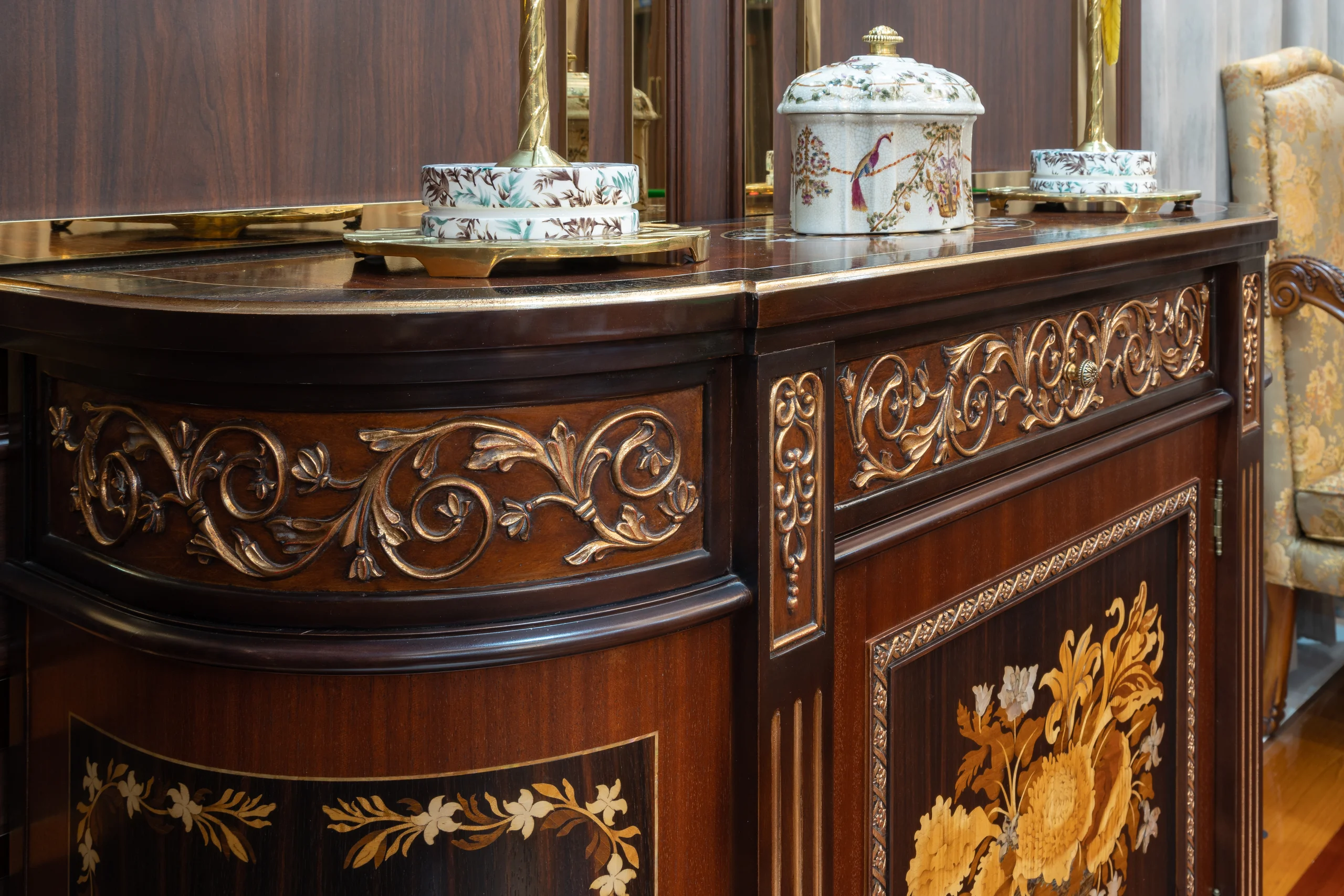
Carving
Inlay
Seat Configuration
Some projects involve modifying an existing design, while others require a piece to be developed almost entirely from a new brief.
When Does Custom Furniture Make Sense?
1. Unusual Room Dimensions
A long living room may need a sofa with different proportions from a standard retail model.
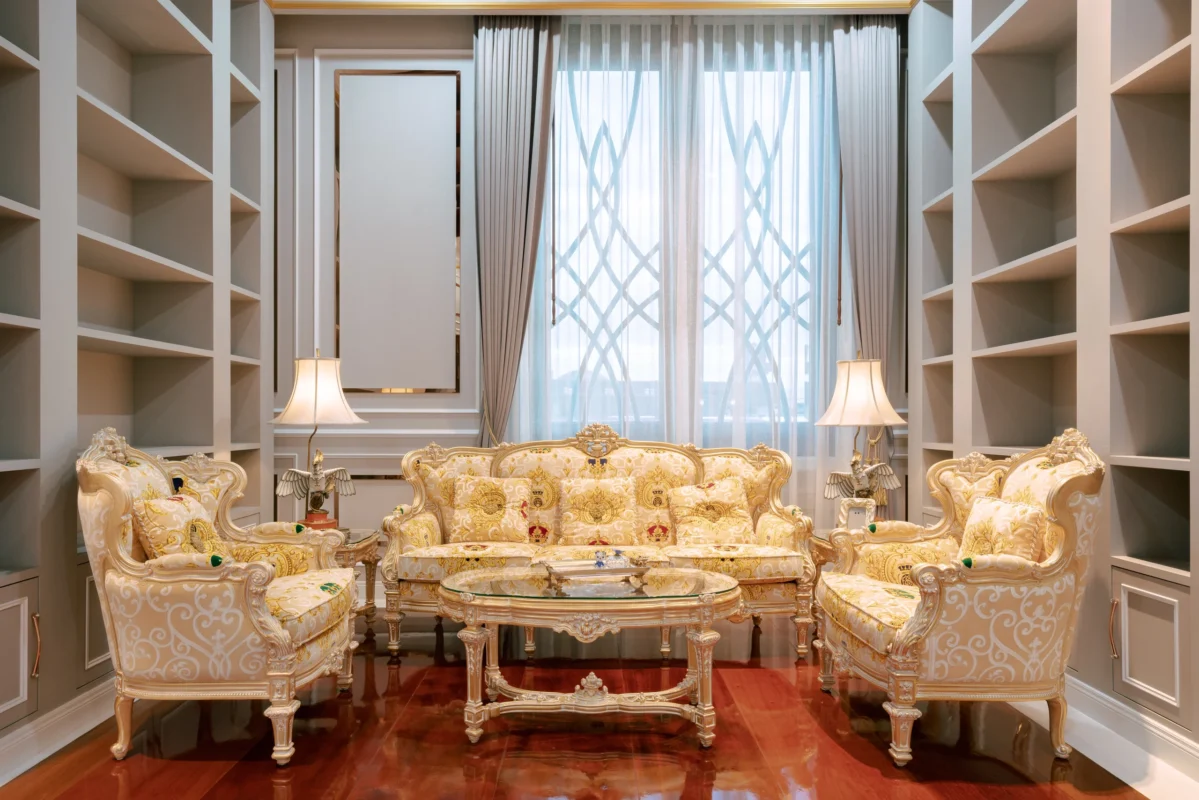
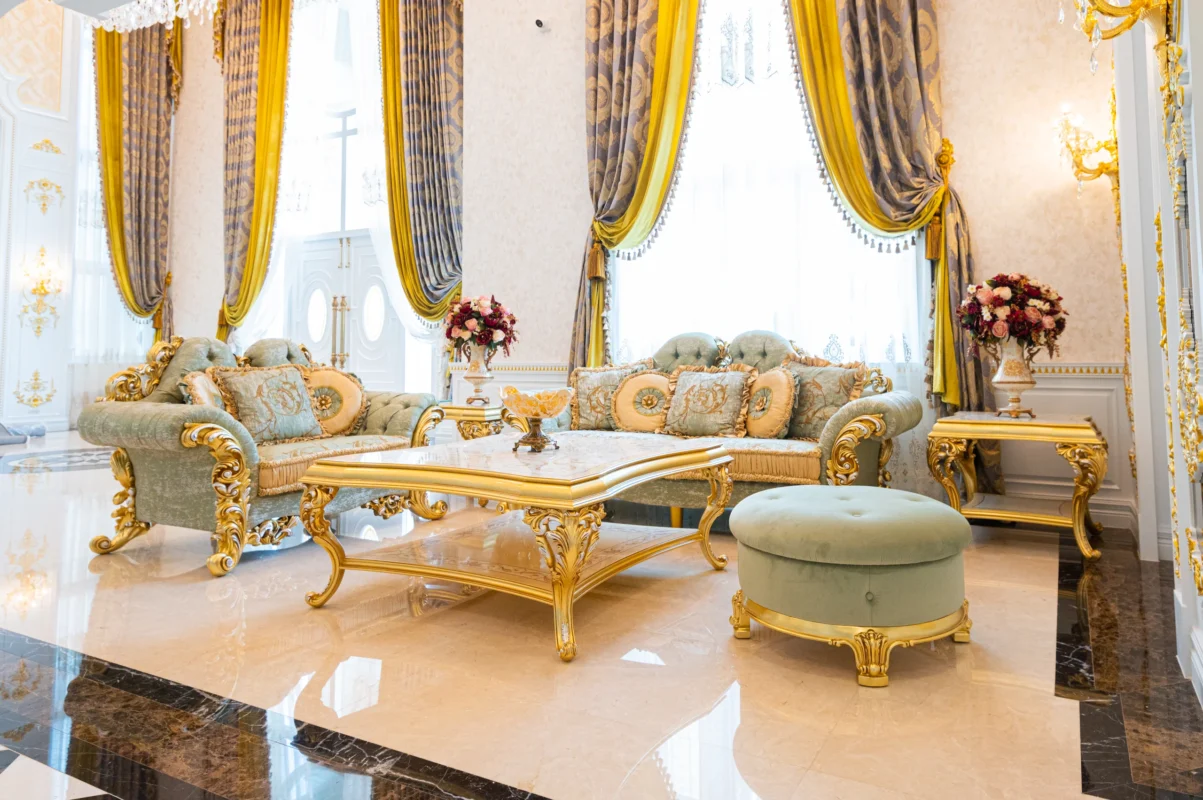
2. Large Residences
Very large rooms can make normal furniture appear underscaled.
Increasing the size of certain pieces may help them relate better to the architecture.
3. Specific Material Palette
An interior designer may need the wood finish of a console to coordinate with wall panelling, flooring or cabinetry.
4. Seating Requirements
A dining table may need to accommodate a specific number of guests.
5. Statement Pieces
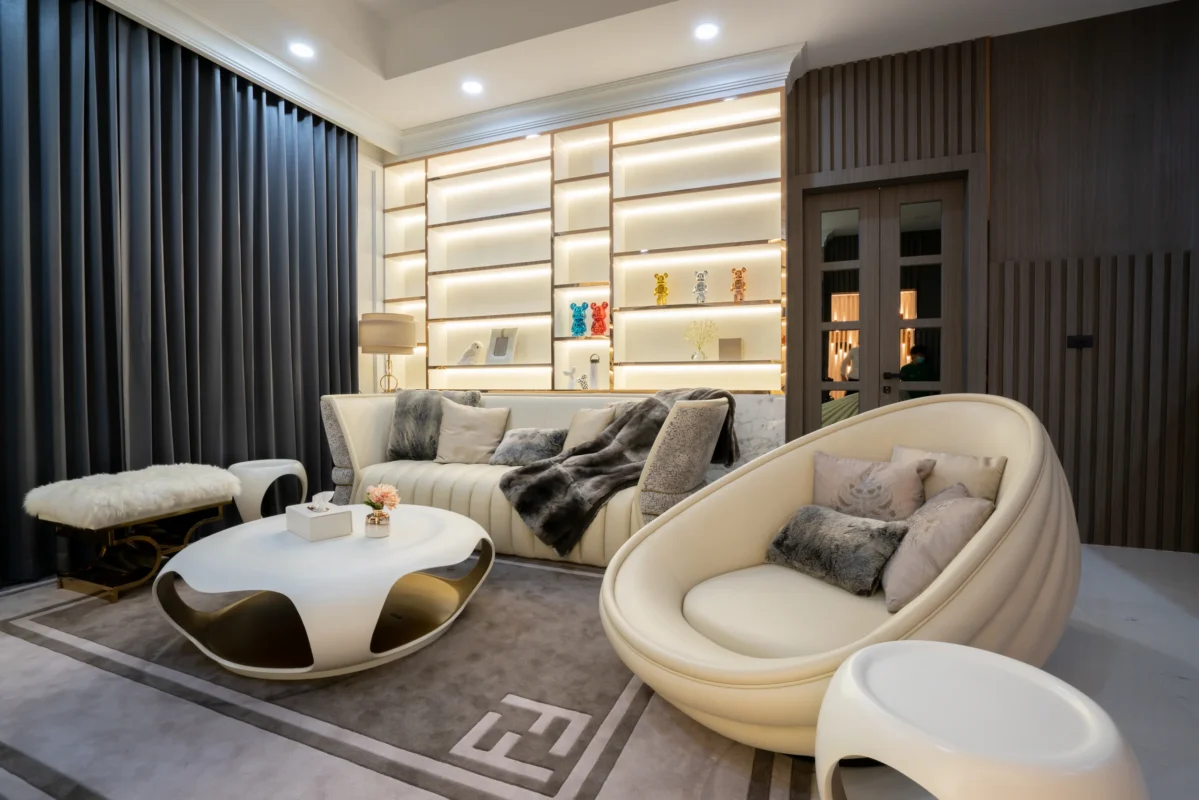
A project may require one distinctive piece to become the focal point of the room.
What Can Usually Be Customised?
This depends on the product and production method.
Size
Width
Depth
Height
Upholstery
Fabric
Leather
Colour
Texture
Wood
Tone
Stain
Gloss Level
Metal
Brass
Bronze
Black
Polished
Brushed Finishes
Stone
Different stones may sometimes be selected depending on design and availability.
Custom Furniture Is Not the Same as Built-In Furniture
The two terms are often confused.
Custom Furniture usually refers to movable pieces designed or modified to specification.
Built-In Furniture is generally fixed to the architecture, such as wardrobes, kitchen cabinets or fitted wall units.
A project may use both.
For example:
Custom Sofa
Furniture Sourcing vs Custom Furniture
Furniture sourcing means finding existing products that meet the project requirements.
Before designing something from scratch, a sourcing team may search for an existing piece that already satisfies
Dimensions
Design
Material
Budget
Lead Time
If no suitable option exists, customisation can then be considered.
This approach can save both development time and unnecessary custom production.
The Custom-Made Process
Although processes differ, a typical project may involve:
Step 1 — Brief
Define function, dimensions, style and material direction.
Step 2 — Site Measurement
Confirm dimensions and access conditions.
Step 3 — Design Development
Prepare drawings and confirm proportions.
Step 4 — Material Selection
Confirm wood, fabric, leather, stone and finishing.
Step 5 — Sample or Finish Approval
Where applicable, approve colours or material samples.
Step 6 — Production
The piece moves into manufacturing.
Step 7 — Quality Check
Dimensions, material and finish are checked.
Step 8 — Delivery and Installation
Large pieces may require specific access planning.
Why Site Survey Matters
Custom furniture can be produced correctly and still fail to enter the property if access has not been considered.
Important measurements include:
Door Width
Lift Size
Staircase
Corridor Width
Turning Radius
Ceiling Height
For large sofas, dining tables or cabinets, logistics should therefore be considered before production.
Common Custom Furniture Mistakes
Customising Without a Clear Reason
Not every piece needs to be custom.
Ignoring Ergonomics
Changing sofa depth or seat height purely for appearance can affect comfort.
Choosing Materials from Photos Only
Physical samples provide a better understanding of colour and texture.
Forgetting Tolerance
Handcrafted and natural materials may have reasonable variation.
Measuring Only the Final Room
Access routes are equally important.
Ready-Made and Custom Can Work Together
A successful interior does not need to choose one approach exclusively.
For example:
Ready-made Sofa
This allows the project to combine efficiency with personalisation.
FAQ
Is custom furniture always more expensive?
Not necessarily in every case, but additional design development, material selection and low-volume production can affect cost.
Is custom furniture worth it?
It can be particularly valuable when standard dimensions or finishes do not work well for the space.
How long does custom furniture take?
Lead times depend on design complexity, material availability, production and shipping. It should be confirmed for each project.
Can I customise an existing furniture design?
Often yes, depending on the manufacturer and construction method.
The Best Furniture Is Furniture That Fits the Space
Customisation should not be treated as luxury for the sake of being different.
Its real value is precision.
A well-designed custom piece responds to Scale, Function, Material and Environment.
La Casa International provides Furniture Sourcing and Custom-made Furniture services alongside imported Furniture, Lighting and Home Decoration for residential and project interiors.