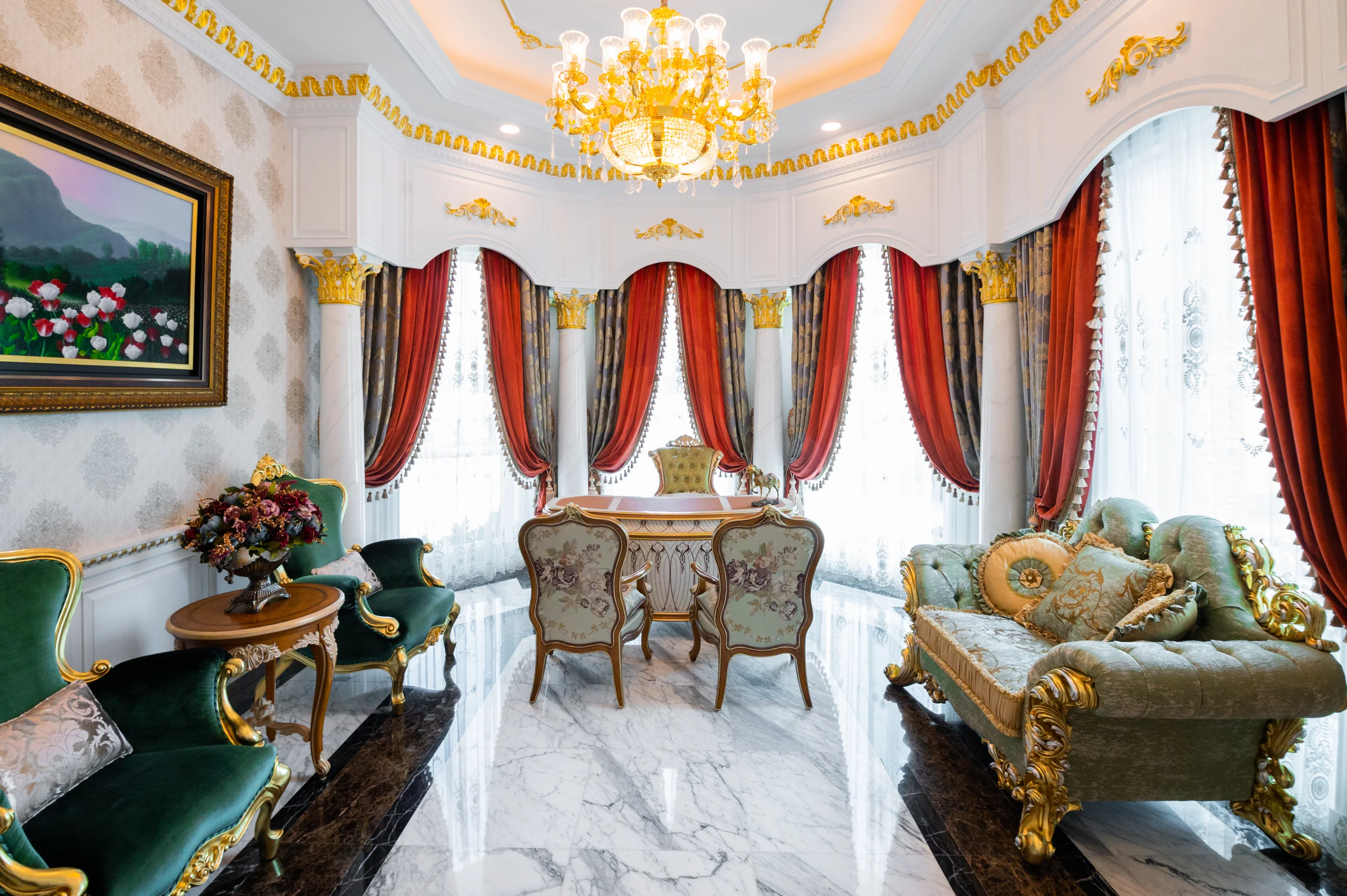
Choosing a chandelier is not simply about finding a design you love.
One of the most common challenges is determining whether a fixture will actually look proportionate once installed.
A chandelier can look impressive in a showroom but appear surprisingly small in a double-height residence. Conversely, a dramatic oversized fixture may overpower a standard-height dining room.
The key is to consider diameter, height, hanging position, visual weight and the furniture or architecture beneath it.
Why Chandelier Size Matters
Lighting influences how we perceive scale.
A fixture that is too small can leave a large ceiling feeling visually empty, while a fixture that is too large can dominate a room and compete with furniture, artwork and architectural details.
There is no single formula that works perfectly for every interior, but several established guidelines provide a useful starting point.
Chandelier Size Based on Room Dimensions
A common starting formula is to add the length and width of the room in feet and use the result as an approximate chandelier diameter in inches.
For example:
A 12 ft × 14 ft room:
12 + 14 = 26
A chandelier around 26 inches in diameter can be used as an initial reference.
This is not a strict rule.
Ceiling height, furniture scale and the visual density of the fixture should still be considered.
A delicate glass chandelier may visually tolerate a larger diameter than a dense solid-metal fixture.
Chandelier Size Above a Dining Table
When a chandelier is installed above a dining table, the table often becomes more important than the overall room dimensions.
A useful starting point is to choose a fixture roughly one-half to two-thirds the width of the table.
For example, for a dining table 100 cm wide, a chandelier approximately 50–65 cm wide can provide a balanced starting range.
However, the appropriate scale may change for sculptural or linear designs.
Round Dining Table
Round tables work naturally with
Round Chandeliers
Globe Chandeliers
Circular Frames
Central Pendant Clusters
The shared geometry creates a clear visual relationship between table and lighting.
Rectangular Dining Table
A long table often benefits from lighting that follows its horizontal proportion.
Consider:
Linear Chandeliers
Oval Fixtures
Multiple Pendants
Long Sculptural Suspensions
Using one small circular chandelier above a very long table can make the table feel visually disconnected from the light.
How High Should a Chandelier Hang Over a Dining Table?
A commonly used starting range is approximately 30–36 inches, or around 75–90 cm, above the tabletop.
This height is generally enough to create an intimate lighting composition while maintaining sightlines between people sitting opposite each other.
Higher ceilings may allow slightly greater distances.
The most important test is practical:
Can people see across the table comfortably?
Does the fixture create glare?
Does it feel connected to the table rather than floating near the ceiling?
Choosing a Chandelier for a Living Room
Living rooms require a different approach because there may be no table directly beneath the fixture.
Consider the complete furniture grouping:
Sofa
Armchairs
Coffee Table
Area Rug
The chandelier should relate to the overall conversation area rather than an individual piece of furniture.
Large open-plan living spaces may also require a larger fixture to visually define the Living Zone.
Double-Height and Foyer Chandeliers
Double-volume spaces offer an opportunity to work vertically.
Instead of thinking only about diameter, consider the overall vertical composition.
Suitable formats may include:
Cascading Glass
Multi-Tier Chandeliers
Long Alabaster Pendants
Crystal Drops
Sculptural Installations
Cluster Pendants
The chandelier can act as a connection between the upper and lower levels of the architecture.
Think About the View from Upstairs
In a double-height home, the chandelier may be viewed from:
Ground Floor
Staircase
Upper Landing
Mezzanine
This means the top and side profiles become more important.
A fixture that looks attractive only from below may not be the best choice for an open staircase or mezzanine layout.
Chandelier Size for Bedrooms
Bedroom chandeliers usually do not need the same scale as foyer or living-room fixtures.
Position also matters.
A chandelier can be placed:
Above the centre of the room
Above the bed
Toward a seating zone
If installed above the bed, greater visual freedom is possible because people do not normally walk directly underneath that part of the fixture.
Consider Ceiling Height
Standard ceilings require more compact fixtures or shorter drops.
High ceilings provide more flexibility for taller fixtures.
For very low ceilings, Flush Mount or Semi-Flush lighting may sometimes be more appropriate than a traditional suspended chandelier.
Material Changes Perceived Size
This is an important factor that basic size formulas do not fully capture.
Clear Glass
Often appears visually light.
Crystal
Can occupy a large volume while maintaining transparency.
Brass
A large solid-brass form may appear more visually dominant.
Alabaster
Stone elements tend to create stronger visual weight even when the fixture has an open framework.
Dark Finishes
Black or dark bronze frames can create stronger outlines against a light ceiling.
Therefore, always evaluate visual weight as well as dimensions.
Common Chandelier Sizing Mistakes
Choosing Based on Product Photos
Product images often lack a reliable sense of scale.
Always check actual dimensions.
Ignoring Furniture
A chandelier should respond to what is below it.
Hanging It Too High
Over a dining table, an overly high chandelier can feel disconnected.
Hanging It Too Low in Walkways
Fixtures above open circulation areas need enough clearance.
Forgetting Installation Structure
Large chandeliers can be heavy. Ceiling reinforcement and installation requirements should be confirmed before installation.
Chandelier Size FAQ
Should a chandelier be centred in the room or over the dining table?
For dining rooms, it is usually more visually logical to centre the chandelier over the table, even when the table itself is not centred in the entire room.
Can a chandelier be wider than the dining table?
Usually the fixture is kept narrower than the table for balance and practical clearance, although sculptural installations may follow different design rules.
Can I use two chandeliers instead of one?
Yes. Two fixtures can work particularly well over long dining tables or large kitchen islands.
What chandelier works best for a double-height ceiling?
Look for fixtures with enough vertical presence: cascading, multi-tier, elongated or clustered designs are often more successful than a wide but shallow fixture.
Scale Is More Important Than Size Alone
The right chandelier should feel as if it belongs to the architecture.
Measurements provide a starting point, but a successful result comes from balancing Room Size + Ceiling Height + Furniture + Material + Visual Weight + Viewing Angle.
La Casa International offers decorative lighting for dining rooms, living rooms, bedrooms, staircases, foyers and double-volume spaces, including chandeliers in crystal, glass, brass, alabaster and natural stone.